Leave Your Message

How to Choose a Bucket Elevator Gearbox?

Choosing a Bucket Elevator Gearbox is not just a matter of matching motor power. The gearbox must handle the elevator’s load, speed, starting conditions, and operating hours. A unit that looks adequate on a specification sheet may struggle when buckets are full, material is damp, or starts are frequent. Small details matter.

A practical reminder from fictional gearbox specialist Mark Ellison: “Select for the real load and duty cycle, not the ideal one.” This is an original illustrative quotation, not a statement from a verifiable industry expert. In practice, confirm the required output speed and torque, then check the service factor, thermal capacity, mounting position, and shaft arrangement. Ask whether the drive can tolerate shock loads during material buildup or an unexpected restart. These checks help narrow the options.

The installation environment matters, too. Dust can collect around seals, while limited access can make routine oil checks difficult. Consider lubrication requirements, sealing, ambient temperature, and available maintenance space before choosing a model. Compare manufacturer data, and verify assumptions with an experienced application engineer. Do not rely on a single horsepower figure. A sound selection should fit both the elevator’s operating demands and the plant’s maintenance capabilities. Just as important, document the assumptions. Real operating conditions change.

How to Choose a Bucket Elevator Gearbox?

Identify the Bucket Elevator Type and Its Operating Conditions

Before selecting a bucket elevator gearbox, identify how the elevator moves material. Centrifugal-discharge elevators run at higher speeds and throw material from the buckets near the head pulley. Continuous-discharge models usually move more slowly and release material gently. The drive may use a belt or chain, and each arrangement affects load, speed, and mounting requirements. Check the manufacturer’s drawings, not just the equipment name.

Small details matter. Note the required throughput, lift height, bucket spacing, and loaded starting condition. Record whether the elevator runs steadily or starts and stops often. Material can also change the answer: damp grain may cling to buckets, while abrasive minerals can increase wear and loading. Dust, ambient temperature, and available space around the drive deserve attention too. I would not size a gearbox from capacity alone. That shortcut can miss starting torque or shock loads.

Then compare the operating data with the gearbox’s output speed, torque rating, service factor, and mounting position. Confirm the motor speed and reduction ratio, and ask whether backstopping is needed to prevent reverse movement when the elevator stops. Leave room for real-world variation; feed rates are rarely perfectly steady. If the duty cycle or material behavior is uncertain, measure it during operation. A little uncertainty should prompt better checks, not a larger gearbox by guesswork.

Calculate Required Speed, Torque, and Service Factor

For a bucket elevator gearbox, start with the required output speed, not motor speed. Calculate head-shaft speed using n = 60v/(πD), where v is belt speed in metres per second and D is pulley diameter in metres. For a 1.8 m/s belt and a 0.50 m pulley, the result is about 69 rpm. Then estimate shaft torque: T = 9550P/n. A 15 kW drive at 69 rpm needs roughly 2,080 Nm before allowances. These are example inputs, not universal design values. CEMA’s bucket-elevator engineering guidance treats material properties, capacity, and operating speed as linked design inputs; confirm actual bulk density and loading conditions on site.

Choose a service factor for the duty, considering starts per hour, impact loading, daily operating time, and possible jams. For illustration, a 1.5 factor raises the example torque to about 3,120 Nm. It is not a default recommendation. AGMA 6013-B16, Industrial Enclosed Gear Drives, and ISO 6336-1:2019 provide recognized frameworks for rating and checking gear capacity; neither replaces application-specific duty assessment. A neat calculation can still miss a rough start. Check gearbox output torque, thermal capacity, shaft loads, and motor starting torque against the elevator’s real operating cycle. Record assumptions, especially belt speed and material density. Those details are easy to overlook.

How to Choose a Bucket Elevator Gearbox?

Compare calculated operating torque with design torque after applying a service factor.

Example calculations use Torque (Nm) = 9,550 × power (kW) ÷ output speed (rpm). The three illustrative duty cases use 3.0 kW at 30 rpm with a 1.50 service factor, 5.5 kW at 45 rpm with a 1.60 service factor, and 7.5 kW at 60 rpm with a 1.75 service factor. Select a gearbox that meets the required output speed and design torque; confirm actual load, starting conditions, and service factor with the equipment supplier.

Choose the Gearbox Type and Reduction Ratio

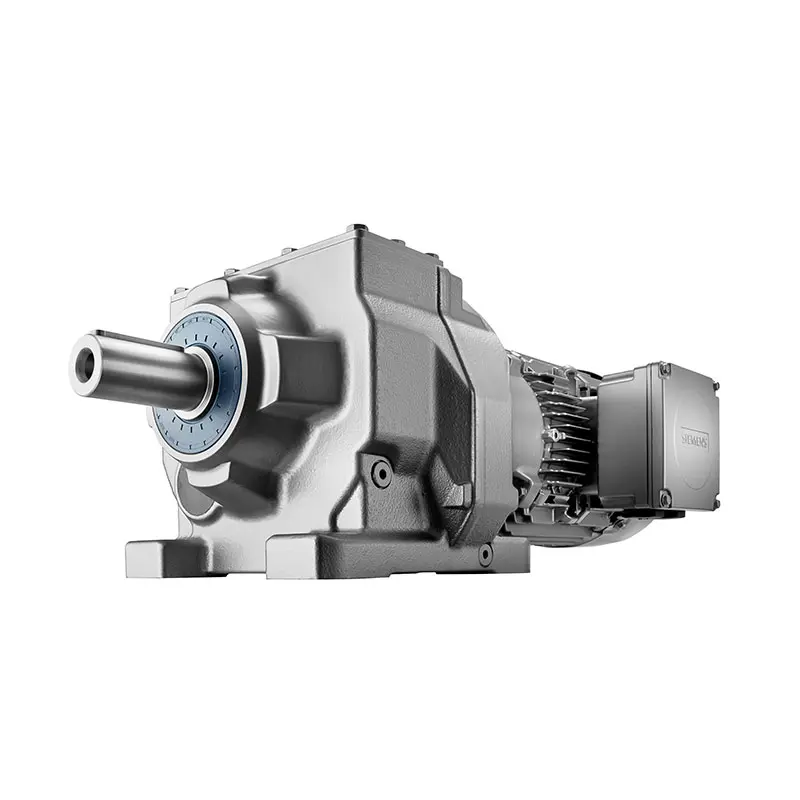
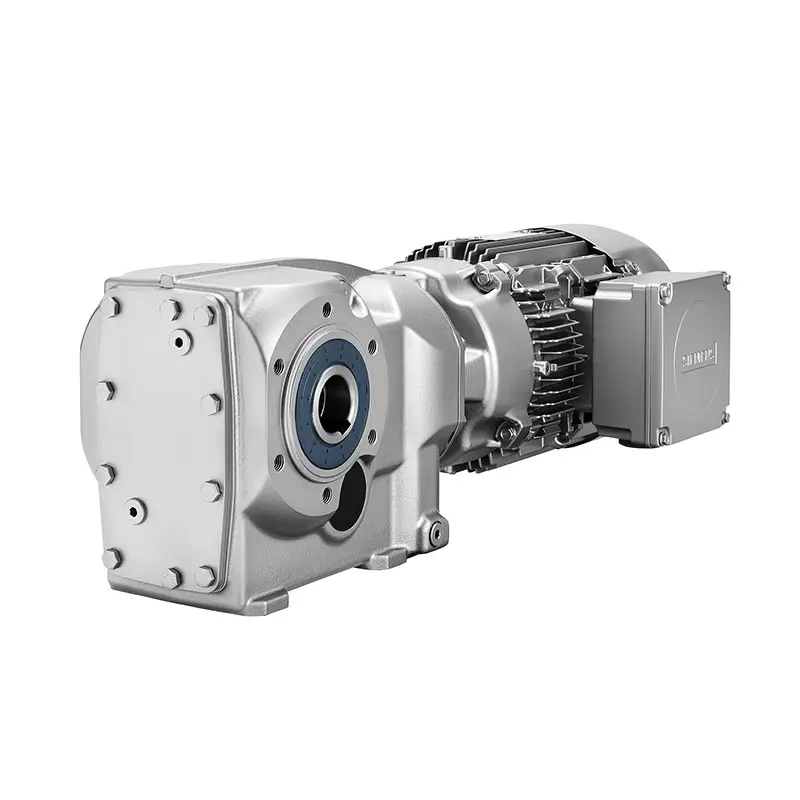
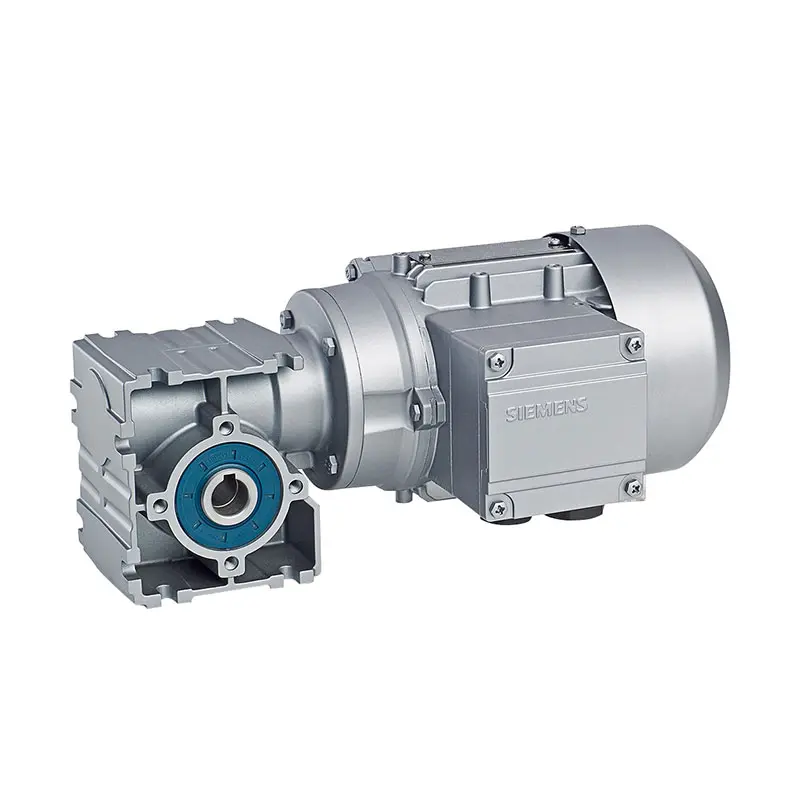
For a bucket elevator, choose the gearbox type around the drive layout and operating duty. An inline helical unit can suit a straight-through arrangement and steady service. If the motor and head shaft need a right-angle connection, a bevel-helical gearbox may fit better. Worm gearing can offer a compact layout, but its lower efficiency may create extra heat during continuous, loaded operation. Check the mounting position, shaft direction, and available space before settling on a type. Small details matter. A gearbox that fits the drawing may still obstruct maintenance access.

Set the reduction ratio from motor speed and the required head-shaft speed. For example, reducing about 1,750 rpm to 35 rpm calls for roughly 50:1. Treat that as a starting point, not a final specification. Confirm the elevator’s rated capacity, bucket spacing, material density, and loaded starting torque. A grain elevator and a unit lifting damp, abrasive material may need different torque margins, even at the same speed. I would also check the gearbox’s permissible output torque and service factor against the elevator maker’s data. It is easy to focus on speed alone. That can leave the drive struggling during a full restart. Recheck the selected ratio against the actual pulley diameter and belt speed before ordering.

Check Mounting, Shaft Alignment, and Environmental Requirements

Choose a bucket elevator gearbox that matches the actual mounting arrangement, not just the required ratio and motor power. Check whether the unit is foot-mounted, flange-mounted, or supported by the elevator shaft. Confirm the output shaft diameter, keyway, hollow-shaft fit, and reaction-arm position against the drawings. Small errors matter. Misalignment can load bearings unevenly, loosen fasteners, and wear couplings. Measure the drive and driven shaft centerlines on site; do not assume the steelwork is perfectly square.

Environmental conditions affect both gearbox life and service access. Record ambient temperature, dust exposure, washdown frequency, and the risk of moisture or corrosive material entering seals. Select suitable sealing and corrosion protection, and verify the lubricant’s operating-temperature range with the supplier. The U.S. Department of Energy’s 2010 Operations & Maintenance Best Practices guide estimates 8–12% maintenance-cost savings from predictive maintenance compared with preventive maintenance. That is broad industrial data, not a gearbox guarantee, but it supports planning for vibration checks and accessible inspection points.

Tips: Check alignment after installation and again after the elevator structure settles. Keep space to remove the gearbox. A tight guard or awkward oil-fill point may seem minor—until routine maintenance becomes difficult.

How to Choose a Bucket Elevator Gearbox? — Check Mounting, Shaft Alignment, and Environmental Requirements
Selection Check What to Confirm Practical Guidance Why It Matters
Required output speed Elevator head-shaft speed and motor speed Determine the required reduction ratio from the motor speed and the target head-shaft speed. Verify the resulting output speed against the elevator design and operating requirements. An incorrect ratio can cause the elevator to run too fast or too slowly, affecting capacity, material handling, and equipment operation.
Power and torque Motor power, starting conditions, load, and required output torque Use the elevator manufacturer's load data and the gearbox supplier's rating method. Allow for starts, stops, material load, and other duty conditions; do not select by motor power alone. The gearbox must withstand both normal running loads and applicable transient or starting loads.
Service factor and duty Operating hours, starts per hour, load variation, and shock loading Choose a rating suitable for the actual duty classification. Confirm the required service factor with the equipment or gearbox manufacturer for the specific application. Bucket elevators may experience variable loading, particularly during starting or when material is present.
Mounting arrangement Foot, flange, shaft-mounted, or other specified configuration Match the gearbox mounting style to the elevator structure and drive layout. Check available space, support stiffness, access for installation, and the specified mounting position. A mounting mismatch can prevent installation or leave the gearbox inadequately supported.
Output-shaft connection Hollow or solid shaft, shaft diameter, key, and locking arrangement Verify that the gearbox output connection matches the head-shaft design. Check shaft dimensions, keyway details where applicable, and the required method of securing the connection. Correct fit and retention help transmit torque and reduce the risk of fretting or movement at the connection.
Input-shaft and motor alignment Motor and gearbox shaft arrangement, coupling type, and alignment tolerances Follow the coupling and equipment manufacturers' alignment limits. Align shafts carefully after installation and recheck after the support structure is secured. Misalignment can increase vibration and bearing or coupling loads, shortening component life.
Head-shaft alignment and support Gearbox output position, head-shaft bearings, and structural deflection Keep the gearbox output and head shaft correctly positioned according to the drive design. Ensure supports are rigid and that the gearbox is not used to compensate for misaligned elevator structure. Excessive shaft loading or misalignment can damage bearings, seals, couplings, or the gearbox.
Backstop or holding function Risk of reverse rotation when the elevator stops Determine whether a backstop or other anti-reverse device is required by the elevator design. Confirm its location, capacity, direction of rotation, and compatibility with the drive. Some inclined or vertical elevator arrangements can be subject to rollback under load. The required protection depends on the application.
Lubrication and mounting position Gearbox orientation, oil level, lubricant type, and service access Specify the actual mounting position and follow the gearbox instructions for lubricant, oil level, venting, and maintenance. Check that drains, breathers, and inspection points remain accessible. Lubrication requirements can vary with gearbox orientation; an unsuitable oil level or blocked breather can impair operation.
Ambient temperature Minimum and maximum surrounding temperatures and operating temperature Check that the gearbox, lubricant, seals, and any accessories are rated for the site's temperature range. Consider additional cooling or other measures only if required by the supplier's rating. Temperature affects lubricant viscosity, heat dissipation, and seal performance.
Dust and moisture Fine material dust, washdown, rain, humidity, and enclosure exposure Specify the actual exposure and select suitable sealing and enclosure protection. Protect breathers and seals from direct contamination, and follow the equipment instructions for cleaning. Dust or water ingress can contaminate lubricant and accelerate wear or corrosion.
Corrosive or hazardous conditions Chemical exposure, corrosive atmosphere, or classified area requirements Identify the substances and applicable site requirements before specifying coatings, materials, seals, or electrical accessories. Confirm suitability with qualified equipment suppliers. Standard components may not be appropriate for corrosive or regulated environments.
Installation and maintenance access Space for lifting, coupling work, inspection, oil changes, and removal Allow room to install and remove the gearbox safely. Provide access to service points and follow the lifting and installation instructions for the selected unit. Good access reduces installation difficulty and supports routine inspection and maintenance.
Final specification check Ratio, power, torque, mounting, shaft details, duty, and site conditions Share the elevator duty data, drive layout, and environmental conditions with the gearbox supplier before ordering. Confirm the final selection against the elevator manufacturer's requirements. A complete application review helps avoid sizing and installation mismatches.

Compare Efficiency, Maintenance Needs, and Reliability

How to Choose a Bucket Elevator Gearbox?
Compare Efficiency, Maintenance Needs, and Reliability

A bucket elevator gearbox must handle steady torque, uneven loading, and frequent starts without overheating. Compare efficiency at the actual operating speed and load, not just the highest figure on a specification sheet. The U.S. Department of Energy’s 2014 Improving Motor and Drive System Performance sourcebook reports that motor-driven systems use about 54% of U.S. manufacturing electricity. This figure covers complete systems, not gearboxes alone, but it shows why drive losses deserve attention. Small losses add up.

Maintenance needs depend on access and operating conditions. Check whether technicians can inspect oil, seals, and mounting bolts without dismantling nearby equipment. In dusty service, contamination can shorten lubricant life; follow the supplier’s oil and inspection guidance, then adjust it to real site conditions. Reliability also depends on matching the gearbox to starts, load surges, ambient temperature, and any backstop requirement. A high efficiency rating cannot compensate for an undersized unit. I would still treat catalog ratings cautiously: elevator loading is rarely perfectly uniform.

Tips: Record gearbox temperature, noise, and vibration during normal operation. A sudden change may signal trouble, but one reading is not a diagnosis. Check oil condition and leakage at scheduled intervals, and keep notes. That record makes patterns easier to spot.